Cez and I have just returned from a two-and-a-half-month road trip (2.5 months) around the Baltic Sea. A few years ago, we decided that we would love to do a road trip through the Nordic region, and the best way to do it would be via a campervan (some people spell it ‘camper van’!). We love road trips and have done long ones in the past. For example, we did a 50-day road trip through 15 Baltic and Scandinavian countries, including Macedonia, Montenegro, and Croatia. We loved that trip.
Our Previous Campervan Road Trips
In 2020, we went to the US and did our first official campervan road trip together. We were in the US for two months, but we had a campervan for three weeks, rented from Cruise America. We drove all the way from Denver to San Francisco on the other end. Hello, West Coast! This was Cez’s first experience living in a campervan, and he loved it. We saw the beauty of being able to work and see the country at our own pace.

Is It Better to Hire or Buy a Campervan
This time, we decided to buy our own campervan instead of renting one. Renting a campervan in the Scandinavian countries would be too costly. So, we bought an old 35-year-old vintage Volkswagen LT series van. We are actually the fourth owners. The first owner was a German gentleman, and subsequently, it was sold to previous owners, mostly Polish, and now it’s in our hands.
Our Vintage Looking Campervan Ladybird
On first impression, our campervan is quite a looker. Not because it is very luxurious or new in that aspect, but because it’s so outstanding and vintage. It has a bright red body with a white roof, and it’s about 2.95 meters tall and six meters long. Certain places like roads, tunnels, ferries, and buildings have limits on the length of your vehicle, and six meters is the maximum acceptable for certain categories of ferries or tunnels. So, that was a good thing because we didn’t have to pay for the next tier of vehicle types, which would cost more if our vehicle was longer. We decided to call it Ladybird given the color and shape.

Inside the Campervan
Our campervan had everything we wanted inside. It had a nice stove with three hoobs, which is super convenient if you like to prepare meals on the go. This was so important to have three hobs to be able to cook multiple things at once. For example, I could boil soup while frying rice and boiling water in a kettle all at the same time. We also had a little sink, which we used for everything from washing our faces in the morning to washing dishes to watering our plants.
Greywater, which is the used dirty disposed water from the sink or shower, had to be emptied relatively frequently. The greywater tank in the van was not as big as the freshwater tank, which was three times bigger, so we ran out of water less frequently than hitting the limit of how much dirty water we could hold. This is quite common for most vans.
Disposing of Grey Water
It’s important to constantly check every two to three days to find a place to dispose of your greywater. In certain parts of Europe and the US, this is very commonplace. There’s a certain road icon we noticed in Scandinavia that shows where you can dispose of greywater—it’s a little lorry truck icon with an arrow at the bottom of the lorry to indicate water release.
This can be found in most parts of Europe, but not in every country. When we were driving through the five countries on this trip, we found it quite frequently in Norway and Finland, but not as much in Sweden. In some regions, it’s more challenging, and you actually need to download specific apps or paid subscription apps for campervanning on the road to pinpoint locations for greywater disposal.
Is Black Water Disposal Difficult
Then there is black water, which, as the name suggests, is a little nastier. This primarily refers to water generated from your toilet. In some vehicles, like the one we had in the US, grey and black water gets released from the same system through a sewage pipe outside the vehicle. But for ours, we had what we call a portable toilet. It’s a toilet where you can pour in certain doses of chemicals to help break down the waste into a liquid form. You can then carry this canister to the nearest black water disposal facility to release the contents.
Do You Need a Toilet in Your Campervan
Our campervan, Ladybird—named for its beautiful red color—already came with its own toilet. It’s important to practice proper hygiene and rules with your fellow campervan friends or, in my case, my husband, to ensure the toilet stays clean and doesn’t start to smell. When it starts getting too full, we add more of the chemical. We used a bluish concentrate from the brand Candy, mixed with water in a proportion of one part chemical to five parts water. This powerful liquid breaks down the waste and specific toilet paper designed for campervans.
Some places offer both black and grey water disposal, but some only offer one or the other. Hence it’s important to plan your route and schedule carefully. There were days when we couldn’t dispose of black water for more than a week given we were passing through a more remote area, and I can assure you, it starts to add a “beautiful fragrance” to your campervan.
Living and Working in the Campervan
Our campervan also had a full working space and dining area. It had a one-meter-length table where you could sit on both sides. If you’re relatively small in size, there can be two on each side sitting together to eat. If not, it’s very comfortable for me and Cez to each have one side, and that’s how we worked. He took his corner, and I took mine.
These seats can also be converted into a bed. So, if you’re traveling with more than two people, like a couple with kids, Ladybird can house up to five people, meaning two adults and three kids. We also brought along a microwave for our campervan trip because we like to warm things up, whether it’s milk or food.

Is Sleeping in a Campervan Comfortable
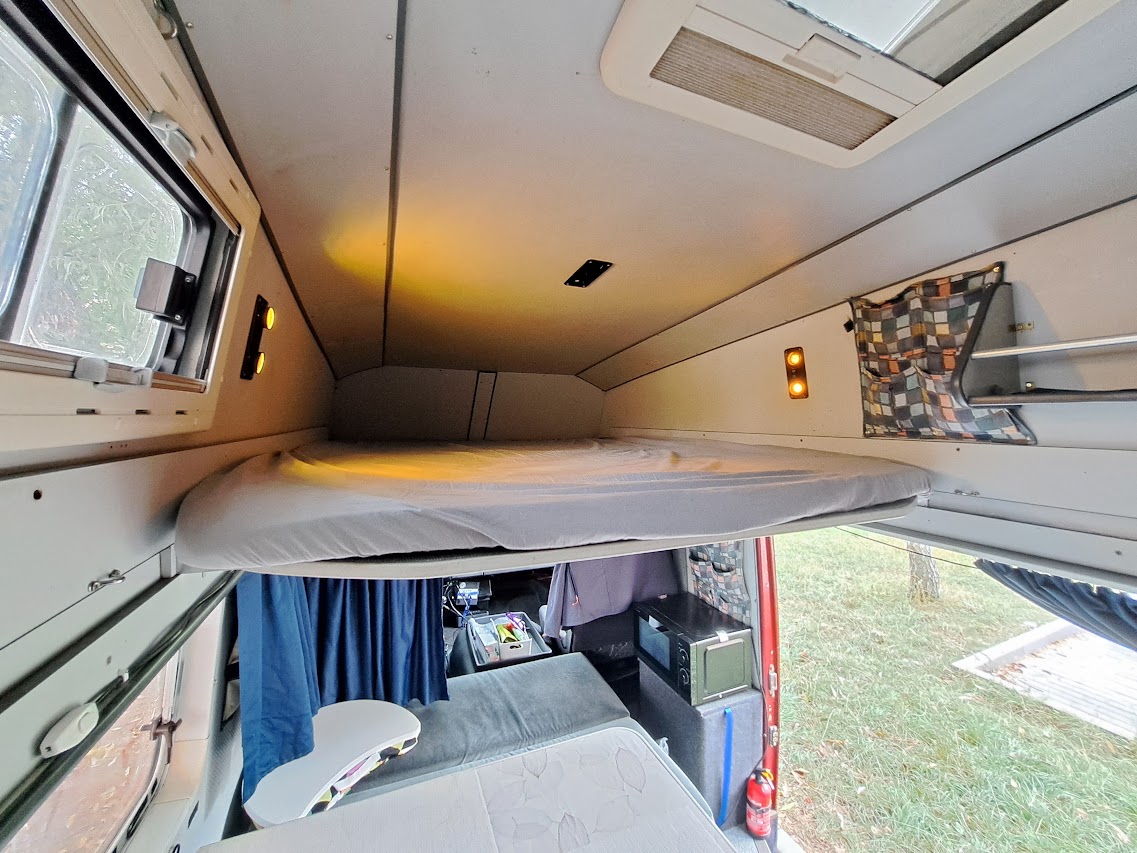
As for sleeping arrangements, our campervan had a bed at the top. Sometimes, one person might wake up earlier and want to start work or cooking first, and it wouldn’t be great if we had to share that spot. So, we used the bed above. The original design of the LT series had a pull-out bed, meaning there was a way to pull out the wooden frame and collapse it into place to create a full-length bed. However, after being passed through four owners, ours had been redesigned into a foldable setup. We simply pushed up the wooden frame and clipped it to the top so that things inside the bed area wouldn’t fall out while we were traveling.
What Is The Ideal Size of Your Campervan Bed
Our campervan bed was quite spacious, more than a queen size, although Cez and I had to get used to not bumping into each other too much when we crawled into it. After a while, we got used to it and slept quite well, even through the rainy nights or by the highway. The bed was big enough for us to sleep soundly, even with pillows or bolsters at our side. We didn’t have to rub shoulders too much while sleeping, which was important for us because we like to sleep peacefully without interruptions.
How Much Is Enough Storage Space in Campervans
When it comes to storage and compartments, this wasn’t a problem at all. We had plenty of storage space. We had a cabinet for clothes—mine were hung on hangers, and Cez’s clothes were folded and placed on shelves right next to mine. This worked out very well for both of us.
We also had three cupboards for food, storing everything from canned food to rice to noodles—four types of noodles in fact! We had instant noodles, ramen, egg noodles, and dry noodles of all kinds of brands. We also brought along a lot of fresh produce, like eggs, pita bread, and bananas. For snacks, we had high-energy options like chocolate bars, oats, nuts, and apricots.
The Challenges of Food Storage on Long Trips
The slight downside was the size of our fridge, given I am the cook on the team. We had a small, bar-sized fridge below our stove, which was usually big enough for us and I am relatively satisfied. It only got overwhelmed when we tried to stock up on food before crossing from one country to another.
For example, when leaving Finland for Sweden, we loaded up on things like tofu, fresh vegetables, vegan bites, frozen food, and all kinds of fresh produce that could last only a couple of days. From that day on, the meals we eat is dependent on which items are the fastest to go bad. I will start with making the seafood dishes, followed by salads, vegan produce, soups, and the list goes on. Whenever the bananas start going bad, that’s when I start requesting pancakes for breakfast:)
If you’re going to take such a long trip, it’s important to make sure you have the most essential things you need that have a high shelf life. Everything else is a luxury. Here’s a helpful RV Packing checklist to prepare for the next trip.


Preparation for the Road Trip
The trip itself lasted 10 weeks. We bought our camper van and started fixing it up at Cez’s grandmother’s house, where we also did some initial servicing with the help of a paid mechanic. While there, we installed a few essential items, including security cameras and an alarm system to ensure that if someone tried to break into the vehicle, it would sound off. That installation cost us approximately US$500 to $600. Additionally, we installed more lights in the vehicle and bought an inverter.
Important Gadgets to Work in your Campervan
An inverter is crucial if you use a lot of electronics while on the move. It converts the energy generated by the vehicle into electrical energy, which you can use to power your laptop, speakers, or other necessary electronics to stay connected and work on the go. As digital nomads, we needed this setup to maintain our work routine. We had two screens—one primary and one secondary—which I occasionally used for work. We also had two speakers: one portable and one with a nice bass. We frequently charged our devices with portable chargers in the vehicle, but to be honest, it wasn’t sufficient without an extra battery that could be recharged while driving.
RV Batteries and their importance
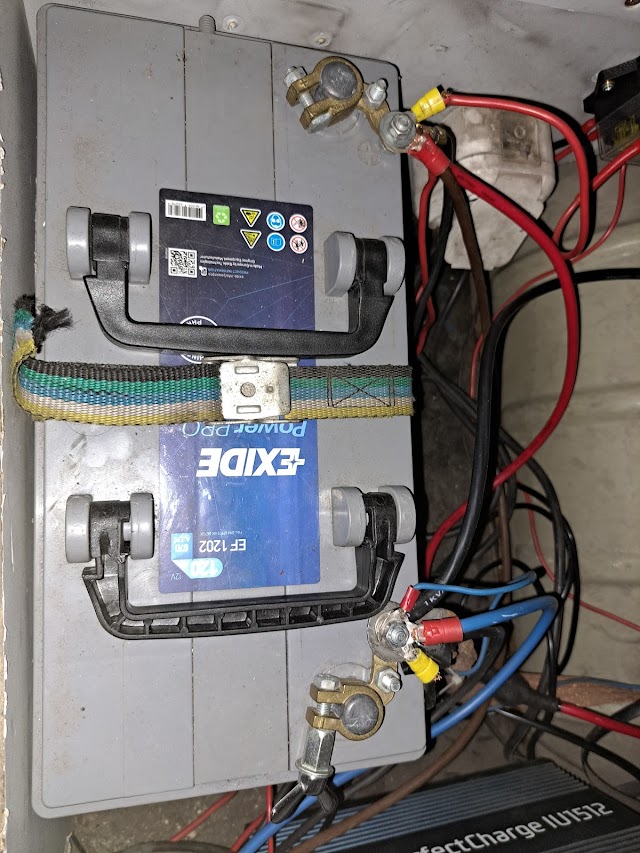
In a campervan, there are typically two batteries. The first is the car battery, also known as the starter battery, which is necessary to switch on the engine and charge while you drive. The second is what we call the “hotel battery.” The hotel battery powers other things in the van, such as the fridge, lights, charging points, and various gadgets, especially when the vehicle is stationary. Our hotel battery was also recharged by solar panels installed on our roof.
Solar Power
Our solar panels were attached to the top of our camper van and came with the van itself. These solar panels were relatively old, so they provided enough power to keep the fridge cold throughout the day if it was sunny. However, they weren’t enough to charge our devices, run the microwave, or use a hair dryer.
Two weeks into our trip, while we were in Finland, we had to upgrade our hotel battery. The new battery cost us approximately 300 to 400 euros. We also needed to replace the starter battery due to poor battery management, which led to the starter battery being drained. Thankfully, the starter battery wasn’t as expensive.
In general, we spent at least four to five hours working every day. We recharged everything while driving. Some people use generators to power devices like microwaves or hair dryers while stationary, so that’s something to consider for those who plan to do a lot of boondocking.

Exploring the Baltic and Scandinavian Region
As part of our journey through the Baltic and Scandinavian countries, we traveled with Ladybird through five countries over several months. We began our journey in Poland and drove into Lithuania.
Exploring Lithuania, Latvia, and Estonia on Campervan
We spent approximately three to four days in Lithuania, staying about two to three days in Latvia, before heading into Estonia. Estonia was a highlight of our trip. We stayed in Tallinn, the capital city, during the week of my birthday in June. This coincided with the period known as the Midnight Sun, or Midsummer, when the day is the longest, and in Estonia, it felt like the day never ended. It was perpetually bright the entire day, which was quite fascinating. It really played tricks on our minds, as we struggled to figure out when to sleep, given the constant daylight.
Exploring Finland on Campervan
After spending nearly a week in Estonia, we took a ferry to Finland and arrived in Helsinki. We absolutely loved Helsinki and ended up staying there for a week. After pulling ourselves away from the city, we began our journey north toward Lapland, the northernmost part of Finland. Lapland is the place to visit if you want to see Santa Claus Village, something I’ll discuss in more detail in some upcoming articles.
Exploring Sweden on Campervan
After exploring Lapland, we crossed over into Sweden. We spent about two to three days in Sweden before finally entering Norway, the main destination of our trip. We spent a full month in Norway before returning to Sweden, where we caught a ferry from Trelleborg back to Poland.
Our Itinerary in Summary
Our journey took us through six countries: Lithuania, Latvia, Estonia, Finland, Sweden, and finally Norway. We drove through beautiful landscapes, visited national parks, and explored cities along the way. We especially liked the capital Tallinn, a city that perfectly blends medieval charm with modern amenities like art museums and more. No wonder people call it the digital nomad haven in the Baltic region.

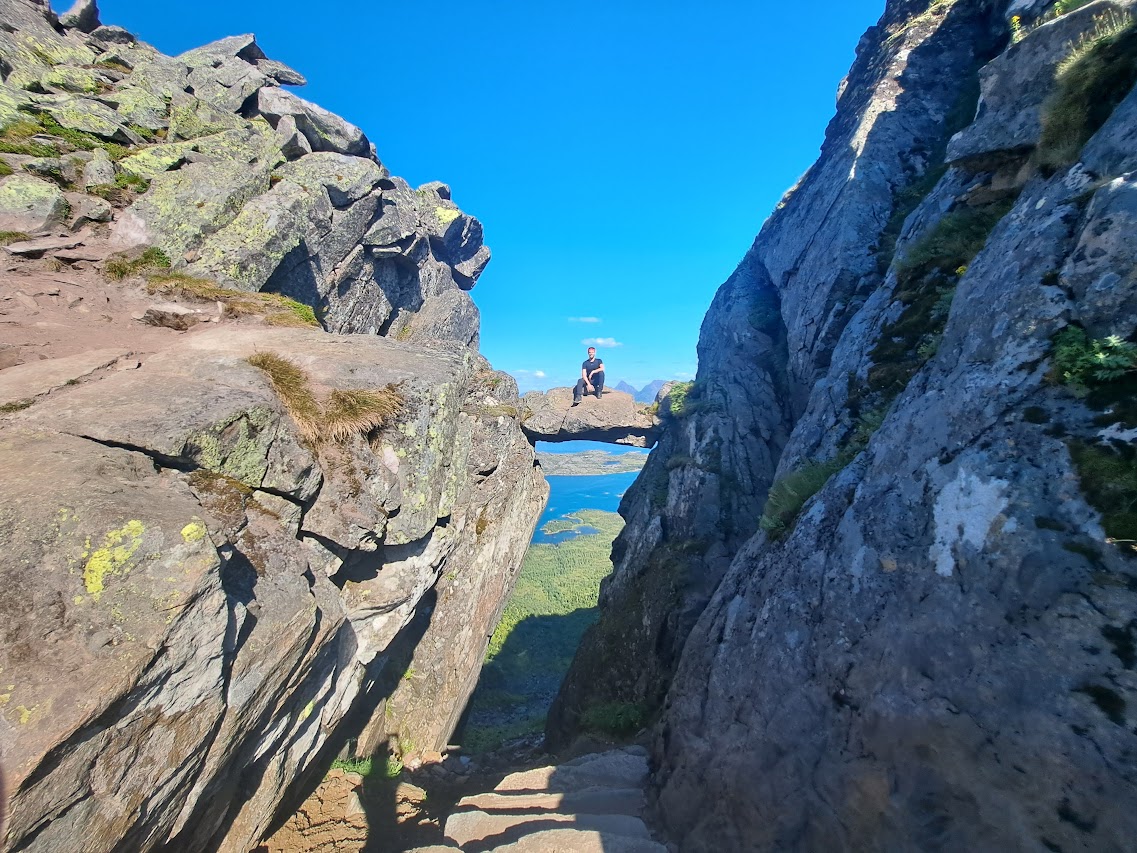
As you can see, we spent our days exploring national parks, hiking through dense forests, and enjoying the peaceful atmosphere of the Nordic wilderness. The long daylight hours of the northern summer allowed us to make the most of our time outdoors, immersing ourselves in the natural beauty of the region.

Embarking on Our Campervan Adventure
Our campervan adventure around the Baltic Sea was an unforgettable experience. We traveled through five countries, explored beautiful landscapes, and experienced the unique cultures of the region. Our vintage campervan, Ladybird, became our home on wheels, providing us with the freedom to travel at our own pace and discover hidden gems along the way. This journey taught us the importance of preparation, flexibility, and embracing the unexpected.
In summary, this was our campervan trip around the Baltic Sea. I’ll be sharing more details about what it’s like to live on the road, what you can expect to see and do, and how to make it sustainable while living affordably in a campervan. Stay tuned for my upcoming articles on how we managed this incredible journey.